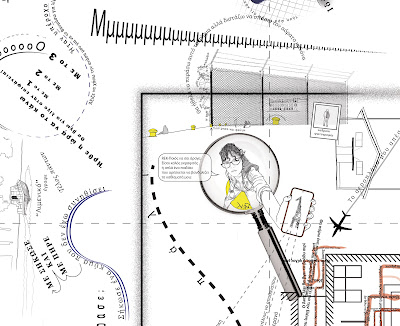
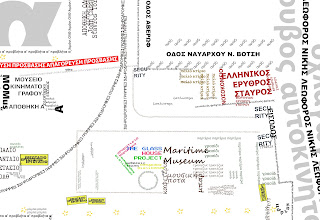
Το εργαστήριο τέχνης και αρχιτεκτονικής Post - Platform: ανιχνεύοντας το αθέατο, ιχνογραφώντας το επερχόμενο, οργανώθηκε από την εικαστικό και αναπληρώτρια καθηγήτρια του τμήματος Αρχιτεκτόνων ΑΠΘ, Νάντια Καλαρά και παραγματοποιήθηκε στο πλαίσιο του του διεθνούς προγράμματος Α Sea Change που αφορά δημιουργικές επεμβάσεις στα πολιτισμικά κια φυσικά οικοσυστήματα που σχετίζονται με τη Μεσόγειο θάλασσα, και σε συνεργασία με το MOMus Πειραματικό Κέντρο Τεχνών στη Θεσσαλονίκη. Στο εργαστήριο συμμετείχαν φοιτητές του μεταπτυχιακού προγράμματος σπουδών του τμήματος Αρχιτεκτόνων ΑΠΘ, "Σχεδιασμός Αιχμής: Καινοτομία και Διεπιστημονικότητα στο Σχεδιασμό" και προπτυχιακοί φοιτητές που ειχαν ολοκληρώσει το μάθημα επιλογής του εαρινού εξαμήνου 2022-23, "Τέχνη και Πόλη: Αποχαρτογραφήσεις".
Καθώς παρατηρείται, τα τελευταία χρόνια μια εντατικοποίηση των τουριστικών και πολιτιστικών χρήσεων της Α΄προβλήτας του λιμανιού της πόλης, θεωρήσαμε ότι υπάρχει μεγάλο περιθώριο έρευνας και επεξεργασίας οικολογικών, οικονομικών και κοινωνικών ζητημάτων που εγγράφονται εκεί. Προσπαθώντας να εντοπίσει τα προβλήματα, την πολιτική και την αισθητική της τοποθεσίας, το εργαστήριο εφάρμοσε διάφορες διαδικασίες μη συμβατικής χαρτογράφησης. Οι συμμετέχοντες φοιτητές κλήθηκαν να εφεύρουν τα δικά τους, υποκειμενικά, συστήματα για να εξερευνήσουν τον συγκεκριμένο δημόσιο χώρο, να μελετήσουν τις "αόρατες" δραστηριότητες και στοιχεία, χαρτογραφώντας το εφήμερο, το απτικό και το σωματικό, έχοντας πάντα κατά νου τις συμβιωτικές σχέσεις μεταξύ των ανθρώπων, του τόπου και της θάλασσας.
Η Α' προβλήτα του λιμανιού της Θεσσαλονίκης μπορεί να γίνει αντιληπτή ως μια πλατφόρμα μεταφοράς, μια μεταλλασσόμενη χωρική και χρονική επιφάνεια, ως μεταβατική ή ενδιάμεση ζώνη, ως θεματικό πάρκο, ως ετεροτοπία, ως σκηνικό, ως επαυξημένος χώρος, ως πραγματικό και εικονικό πεδίο ταυτόχρονα. Το εργαστήριο επιχείρησε να τοποθετήσει τους συμμετέχοντες στη θέση του καλλιτέχνη και αρχιτέκτονα-ερευνητή, ενός εθνογράφου του καθημερινού. Ο στόχος ήταν η επινόηση εικαστικών χαρτογραφικών μεθόδων που τροφοδοτήθηκαν από τις πρακτικές και τα παραδείγματα που συζητήθηκαν στη δίμηνη διάρκεια του εργαστηρίου. Τα παραδείγματα κάλυψαν μεγάλο φάσμα της ¨χαρτογραφικής τάσης" σε εικαστικούς και αρχιτέκτονες από το 1950 και μετά και συνεισέφεραν στην ανάδειξη των ανενεργών σημασιών του τόπου, στην παραγωγή νέων αφηγήσεων για την πόλη, στον κριτικό αναστοχασμό των αναπαραστάσεων και χρήσεων του δημόσιου χώρου της πόλης. Με την βοήθεια της επικαιροποίησης των πρακτικών της ψυχογεωγραφίας και κυρίως με τη βοήθεια των συναρπαστικών ποιητικών του χάρτη και της χαρτογράφησης που μας προσφέρουν οι σύγχρονες εικαστικές τέχνες, οι συμμετέχοντες κλήθηκαν να εστιάσουν στις πρακτικές της καθημερινότητας που χαρακτηρίζουν την τοποθεσία πέρα από τις επίσημες προσταγές του σχεδιασμού. Να εστιάσουν στην υλοποίηση τρόπων εικαστικής ερμηνείας των ατμοσφαιρών, στην ανίχνευση, παρατήρηση και επεξεργασία των μικρο-οικολογιών και οικοσυστημάτων της επιλεγμένης τοποθεσίας, στην επινόηση και εφαρμογή μεθόδων τεκμηρίωσης και καταγραφής αόρατων, κρυφών, παράπλευρων και παραγκωνισμένων στοιχείων της τοποθεσίας.
Συμμετέχοντες: Χρήστος Γεροθόδωρος, Αριστείδης Γεωργιάδης, Θεοχάρης Δόσπρας, Ευθυμία Καντούρου, Χρύσα Κουλίνα, Ολυμπία Ναζαρίδου, Μαρία Νάντσου, Αθηνά Τάσιου, Μαρίνα Χατζητουλούση
https://a-sea-change.net/programmes/post-platform-detecting-the-unseen-tracing-the-impending-
"Post-platform:tracing the unseen, drawing the upcoming", is an art and architecture workshop, led by visual artist and architecture professor Nadia Kalara, realized in the context of the international program "A Sea Change", in collaboration with MOMus Experimental Center for the Arts in Thessaloniki. The participants were postgraduate and undergraduate students of the School of Architecture, AUTH. The workshop took the first pier of Thessaloniki port as its area of study. Trying to identify the site's problems, politics and aesthetics, it applied various unconventional mapping processes. The participants were expected to invent their own subjective systems to survey this particular area, study the invisible activities and the unseen elements, mapping the ephemeral, the tactile and the corporeal while having always in mind the symbiotic relationships between people, the place and the sea.
The intensification of the touristic and cultural uses of the 1st pier over the last years creates space for research on the ecological, economic and social issues registered and manifested on site. The 1st pier can be perceived and experienced as a transportation device, a mutating spatial and temporal surface, a thematic park, a heterotopia, a theater setting, an augmented space, as a real and virtual terrain at the same time. The workshop attempts to position the participants as artists and architects-researchers, "ethnographers of the everyday".The aim is to devise subjective cartographic methods that will be informed by the practices and examples discussed. The examples cover a wide spectrum of the " cartographic trend" in visual arts and architecture from 1950 on and highlight the inactive meanings of place, contribute to the production of new narratives about the city, the critical reflection of the representations and uses of the city 's public space. With the help of updated psychogeographical practices, mental and critical mapping and most importantly with the help of the fascinating poetics of the map and mapping as manifested in contemporary visual arts, the participants were invited to focus on the everyday practices that characterize the site beyond the dictates of formal planning. To invent and carry out "perceptual experiments" in space, interpret visually various atmoshperes, detect and process micro-ecologies and eco-systems, invent and apply methods of documentation an recording of invisible, hidden, collateral elements of the site.